RELIC SCAVENGER
Solo Project - 3D -Unreal Engine 5 - Stealth Game
Role:
Solo Developer/Gameplay Programmer - Focusing on stealth AI, detection systems, and interaction mechanics
Tools:
Unreal Engine 5
Behaviour Trees & Blackboards
AI Perception (Sight)
Enhanced Input
Motion Warping
Niagara
MetaHumans
What I did:
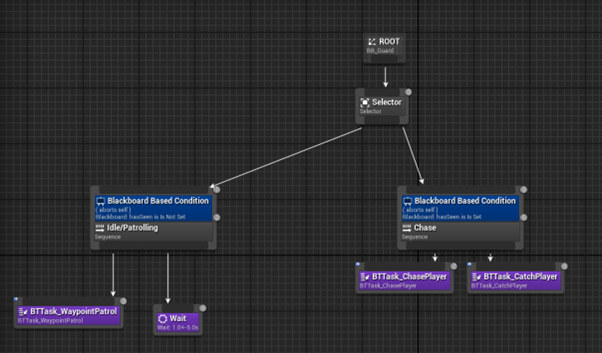
Built guard AI with waypoint patrol and chase/catch behaviour using Behaviour Trees, Blackboards, and AI Perception
Designed rotating sensor hazards that trigger detection, feeding into a global alarm system that alerts all guards
Built an Enhanced Input interaction system for takedowns, with range detection and Motion Warping to align animations
Implemented the full stealth loop: collect 3 jewels while evading guards, unlock gated doors, escape to win
Added a leaderboard that saves completion time on win
What I learned:
Tuning AI to feel fair, not easy or impossible: getting sight perception right took real iteration, small changes shifted guards from trivially avoidable to unbeatable
Stealth systems are only as strong as their weakest link: AI, sensors, alarms, UI, and animation all have to stay in sync, one small edge case in any of them breaks the whole experience, which pushed me toward more consistent state handling and testing
Animation + gameplay polish: Motion Warping improved reliability for mantling and takedowns by aligning animations to the world and targets.
Next steps: I'd add patrol-return behaviour and hearing-based detection, and I've since explored UE5's State Tree as a stronger alternative to Behaviour Trees, which I put into practice on Ash of Nine
What’s in the game
Overview
Relic Scavenger is a solo UE5 stealth game set in an ancient ruin. The player must steal 3 jewels and escape undetected, avoiding patrolling guards and rotating sensor spotlights, backed by production-style systems: AI perception, behaviour trees, UI, save/leaderboard data, and polished interaction feedback.
Guard AI: waypoint patrol + chase/catch behaviour using Behaviour Trees + Blackboards, with tuning via AI Perception (Sight).
Rotating sensor “spotlights”: rotating detection hazards; if the player stays in the beam too long they become detected (with detection feedback).
Global alert system: once detected, an alarm sounds and guards are alerted to the player’s position.
Interaction system (Enhanced Input):
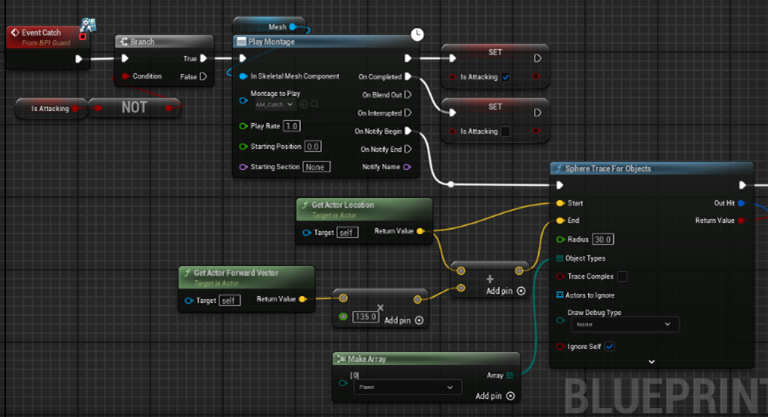
Takedowns with interaction prompt, range detection, Blueprint interface messaging, and Motion Warping to align animations.
Switch interactions to disable laser walls that would trigger alarms.
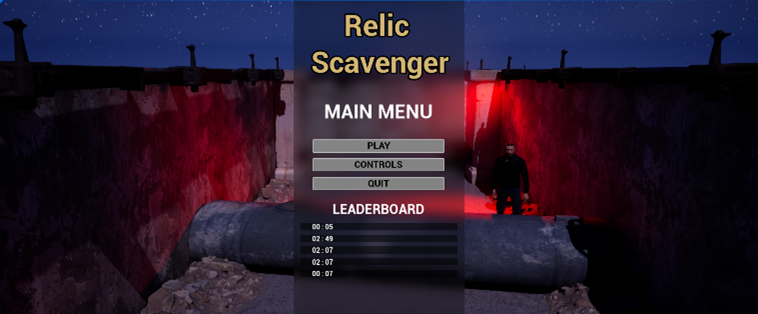
UI + menus: main menu (play, controls, exit, leaderboard), pause menu, win/lose screens, detection meter, and objective clarity via widgets.
Leaderboard: completion time saved on win and displayed on the main menu.
Stealth objective loop: steal 3 jewels → reach the exit → win; get caught by guards → lose.
Jewel collection: gated by interaction, tracking progress to unlock the escape door.
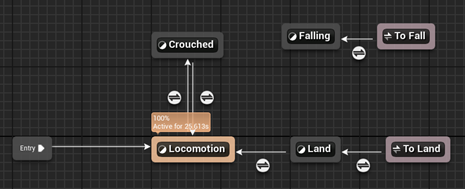
Traversal/animation: crouch/fall/land states, plus mantling (sphere traces + motion warping) and a roll ability.
Atmosphere/polish: Niagara rain/clouds, audio (alarms, footsteps, music), post-processing for night mood + toggleable night vision, and ragdoll physics for takedowns/caught states.